Sate Lilit
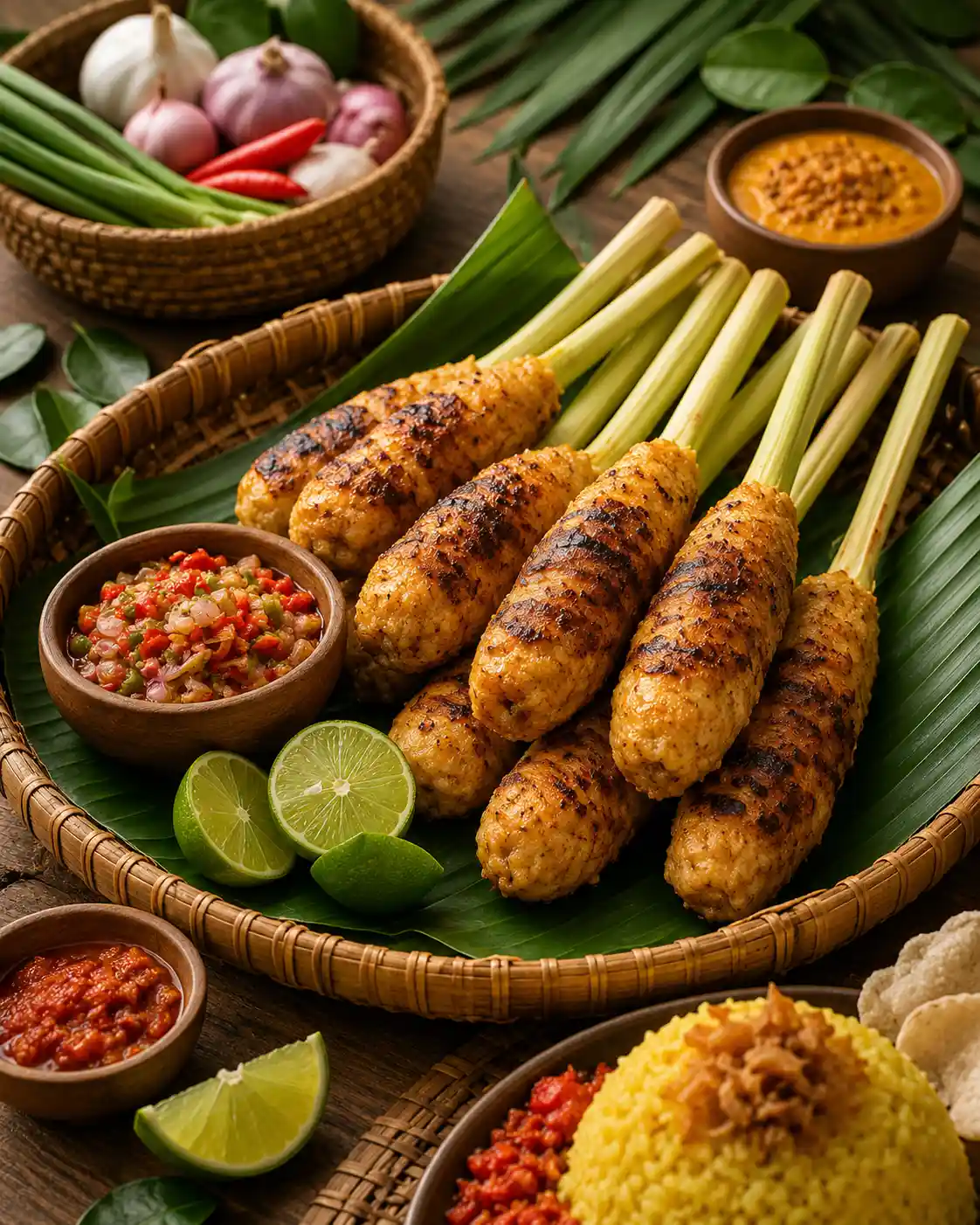
A distinctive Balinese satay preparation in which seasoned minced ingredients are shaped around a skewer. Its aromatic seasoning makes it one of the dishes visitors often associate with Balinese food.
Read the Sate Lilit guide →Balinese cuisine is built around fresh ingredients, aromatic spices, herbs, chillies and carefully prepared pastes. This guide explores some of the dishes and flavours connected to our cooking experience near Ubud.
A GUIDE TO BALINESE CUISINE
Balinese cooking brings together ingredients, techniques and flavours that are deeply connected to the island's food culture. Instead of treating every dish as a separate recipe, it helps to understand how spice pastes, fresh aromatics, coconut, chillies and other local ingredients work together.
The dishes below are a starting point for exploring Balinese food. If you want to experience the preparation yourself, you can also join our cooking class near Ubud and work hands-on with traditional flavours.
Start with three flavours and preparations closely connected to Balinese cooking.
A distinctive Balinese satay preparation in which seasoned minced ingredients are shaped around a skewer. Its aromatic seasoning makes it one of the dishes visitors often associate with Balinese food.
Read the Sate Lilit guide →
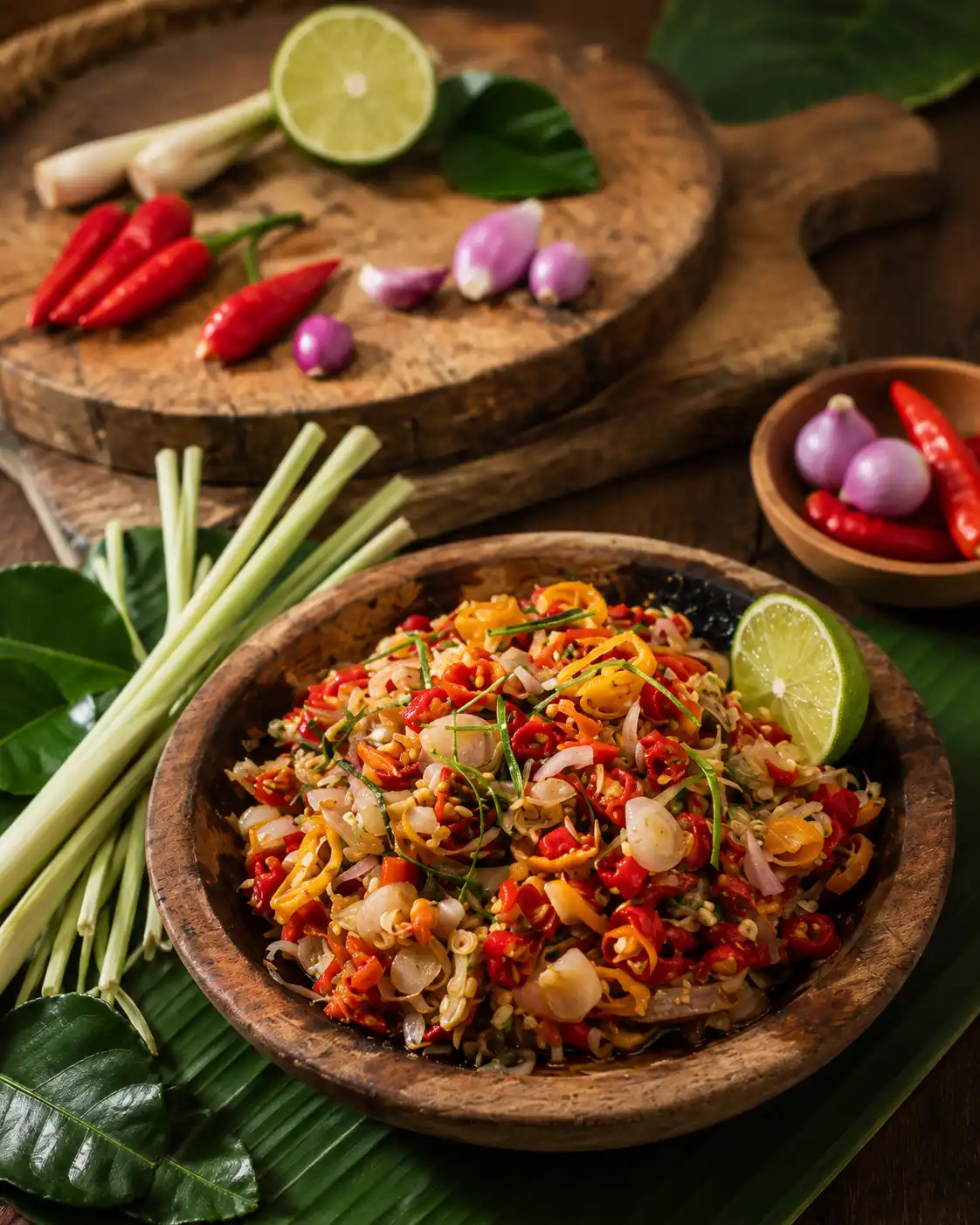
A fresh Balinese sambal made with ingredients such as shallots, chilli, lemongrass and lime. Its bright, aromatic character brings freshness and heat to a meal.
Read the Sambal Matah guide →
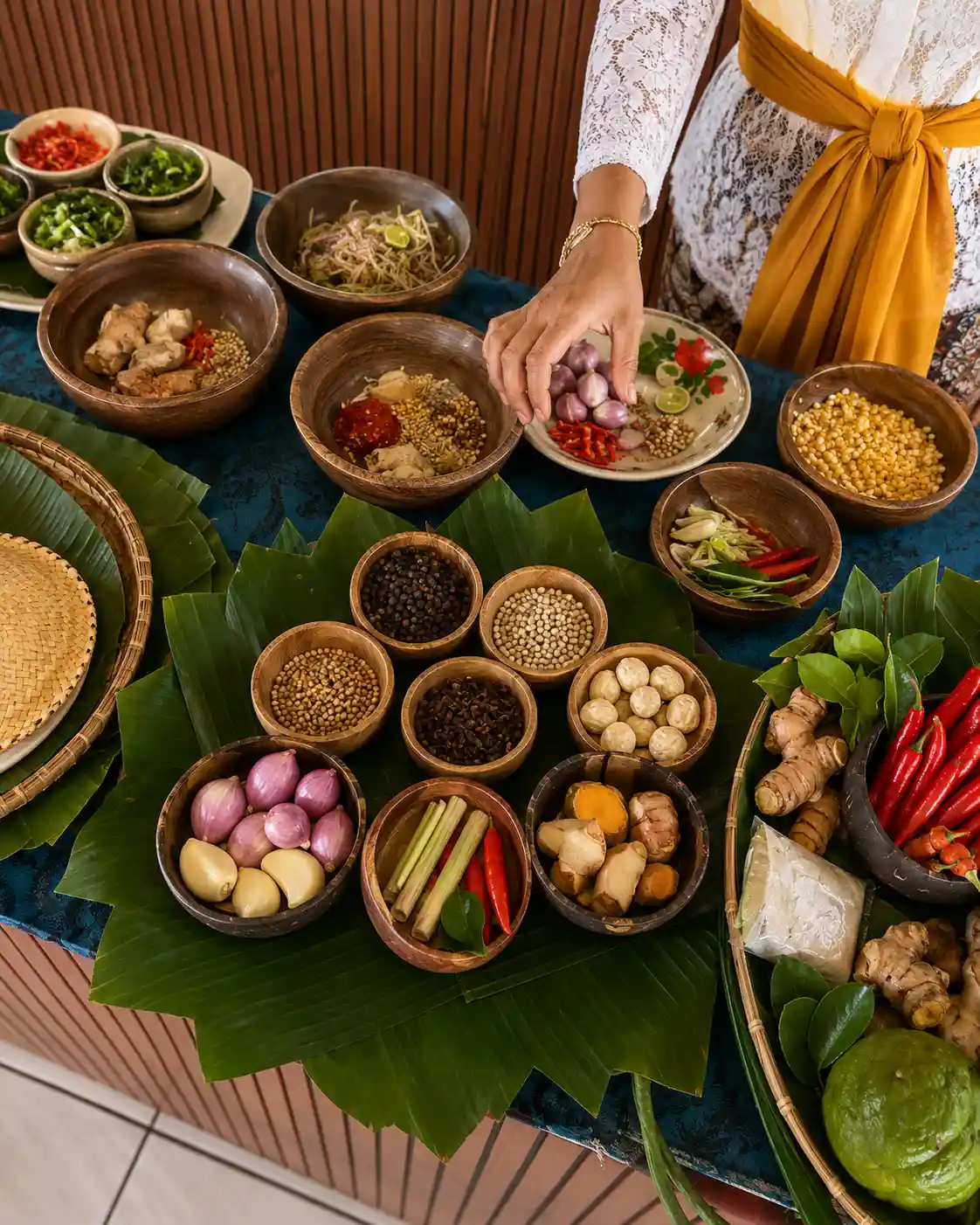
Base genep is a richly aromatic Balinese spice mixture used as a foundation for many preparations. Understanding this seasoning helps explain why Balinese dishes have such layered flavours.
Read the Base Genep guide →Want to learn these flavours hands-on?
See the Ubud Cooking Class
UNDERSTANDING THE FLAVOUR
There is no single ingredient that defines Balinese cuisine. Instead, the character comes from the way aromatic ingredients are combined and prepared.
Spice pastes, fresh herbs, chillies, coconut and other ingredients are used in different combinations depending on the dish. Learning these building blocks makes traditional Balinese recipes easier to understand.
A closer look at some of the ingredients commonly encountered when exploring Balinese cooking.
A fragrant aromatic used to add freshness and depth to Balinese dishes.
Fresh chilli brings heat and brightness to sambal and cooked preparations.
An important ingredient in many Indonesian and Balinese food preparations.
A combination of spices and aromatics creates the layered character of Balinese seasoning.
TRADITIONAL BALINESE FOOD
Beyond individual recipes, Balinese food is part of a wider culinary culture. Explore our dedicated guide to traditional Balinese food for a broader look at dishes, flavours and cooking traditions.
Individual guides for the flavours and preparations connected to Balinese cooking.
Learn about this distinctive Balinese satay preparation.
Discover the fresh, aromatic character of this Balinese sambal.
Understand the aromatic spice mixture behind many Balinese dishes.
Take the flavours from the page into a hands-on local cooking experience.
A few simple answers before you explore the recipes.
Balinese food is known for aromatic spice combinations, fresh herbs, chillies, coconut and layered seasoning. Dishes can range from fresh sambal to richly seasoned cooked preparations.
Sate Lilit is a Balinese satay preparation made by shaping seasoned minced ingredients around a skewer before cooking. It is a distinctive example of Balinese seasoning and technique.
Sambal Matah is a fresh Balinese sambal associated with ingredients such as shallots, chilli, lemongrass and lime. It is known for its fresh, aromatic and lively flavour.
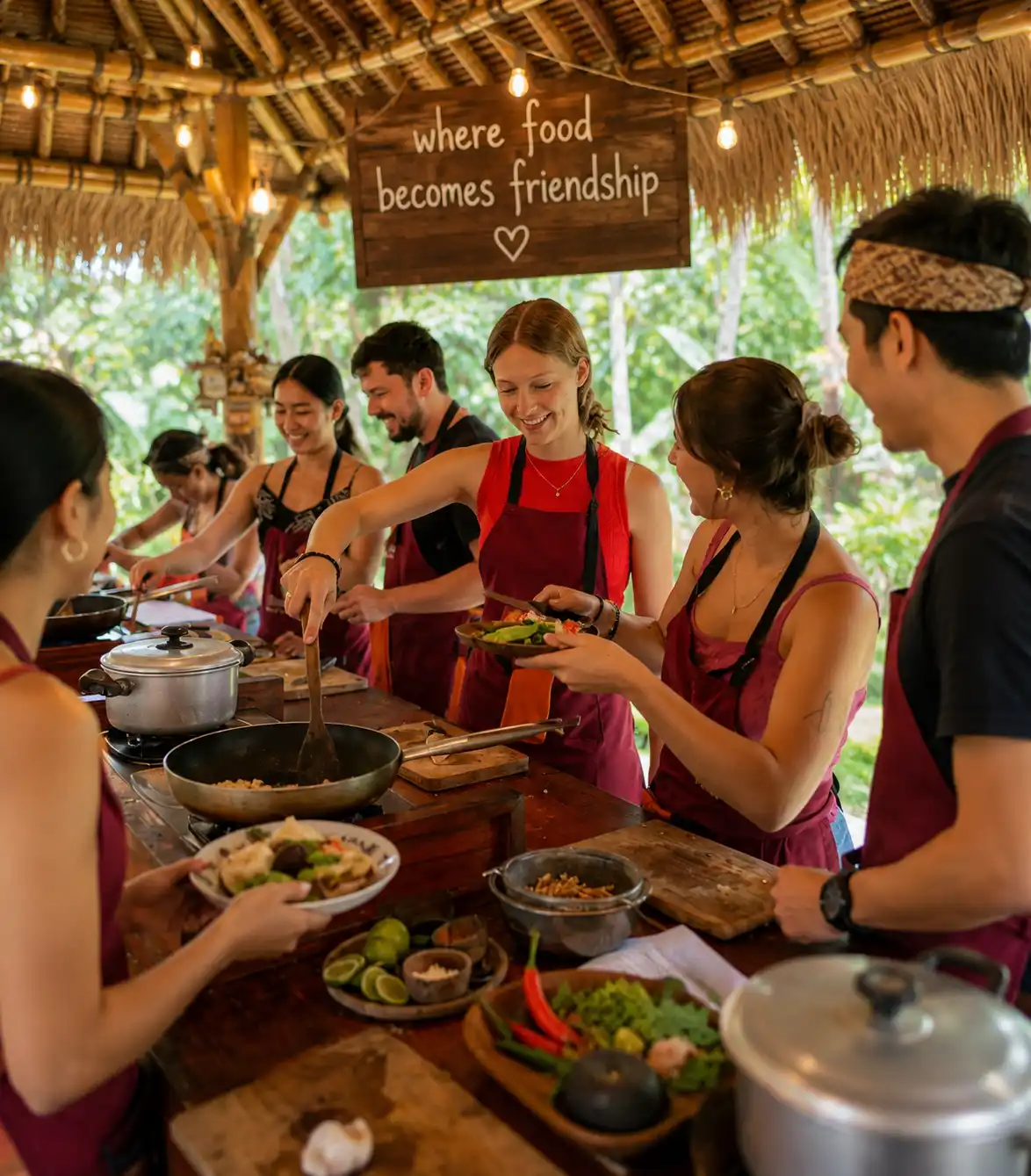
Yes. Our hands-on cooking experience takes place in the Ubud area, in a rural Balinese setting surrounded by rice fields and village life. See the cooking class details here.
FROM READING TO COOKING
Join our hands-on Ubud cooking class and prepare traditional Balinese dishes in the countryside with local hosts and other travellers.