01 · TEXTURE
Minced, not cubed
The protein is finely minced so it can be mixed with the seasoning and shaped around the skewer.
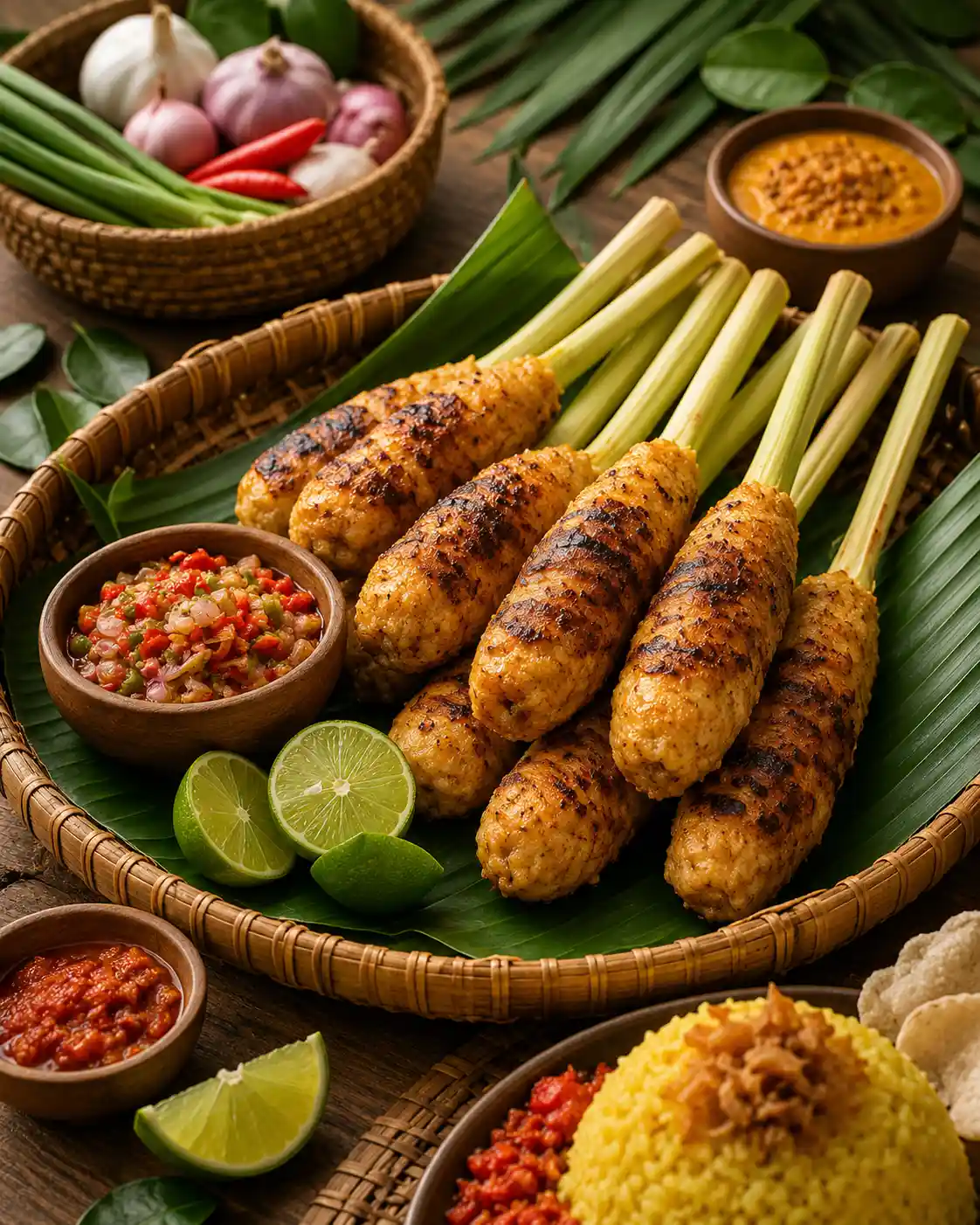
Sate Lilit is a Balinese satay made from finely minced protein mixed with coconut and aromatic seasoning, then wrapped around a skewer and grilled. This fish-based home recipe is designed as a practical guide while recognising that recipes vary across Bali and between households.
WHAT IS SATE LILIT?
Unlike satay made from pieces of meat threaded onto a narrow skewer, Sate Lilit uses a seasoned minced mixture that is pressed or wrapped around a wider skewer, often a lemongrass stalk. The word lilit refers to the wrapping or winding technique.
Fish is a well-known version, but Sate Lilit can also be prepared with other proteins. The exact seasoning and ingredients vary by recipe, household and locality, so this page presents one practical fish-based version rather than claiming there is only one authentic formula.
HOME RECIPE
This version follows the common structure documented by Indonesian culinary sources: minced fish, grated coconut, aromatic Balinese-style spices and a lemongrass skewer. Ingredient proportions are a practical home batch and can be adjusted to taste.
HOW TO MAKE IT
The key to Sate Lilit is getting a cohesive mixture that grips the skewer. The spice paste should be cooked and cooled before mixing with the fish, and the mixture should be pressed firmly enough to hold during grilling.
Grind or blend the shallots, garlic, galangal, turmeric, chillies, candlenuts and optional shrimp paste. Sauté in oil until fragrant and cooked, then let it cool.
Mix the cooled spice paste with finely minced fish, grated coconut, sliced kaffir lime leaves, palm sugar and salt until evenly combined and workable.
Wet your hands, take a portion of the mixture and press it firmly around the thick end of a lemongrass stalk or suitable skewer, leaving a handle.
Grill over medium charcoal or a hot grill, turning regularly. Cook until the outside is lightly browned and the fish mixture is fully set and cooked through.
Serve with steamed rice and a fresh Balinese sambal such as Sambal Matah.
Small details make a big difference when you prepare it at home.
01 · TEXTURE
The protein is finely minced so it can be mixed with the seasoning and shaped around the skewer.
02 · SHAPING
The mixture is pressed around a wider skewer or lemongrass stalk instead of being threaded as chunks.
03 · AROMA
Lemongrass is commonly used as the skewer, adding aroma while the seasoned mixture cooks over heat.
A BALINESE FOOD CLASSIC
Sate Lilit is recognised as a Balinese specialty and can be found in everyday meals as well as communal and ceremonial food settings. Preparation is also well suited to shared cooking because the mixture can be seasoned, shaped and grilled together.
For travellers, that makes Sate Lilit a useful dish to learn: the technique is hands-on, the seasoning introduces several familiar Balinese aromatics, and the finished sate is easy to enjoy with rice and sambal.
Continue through our Balinese food guide.