SATAY
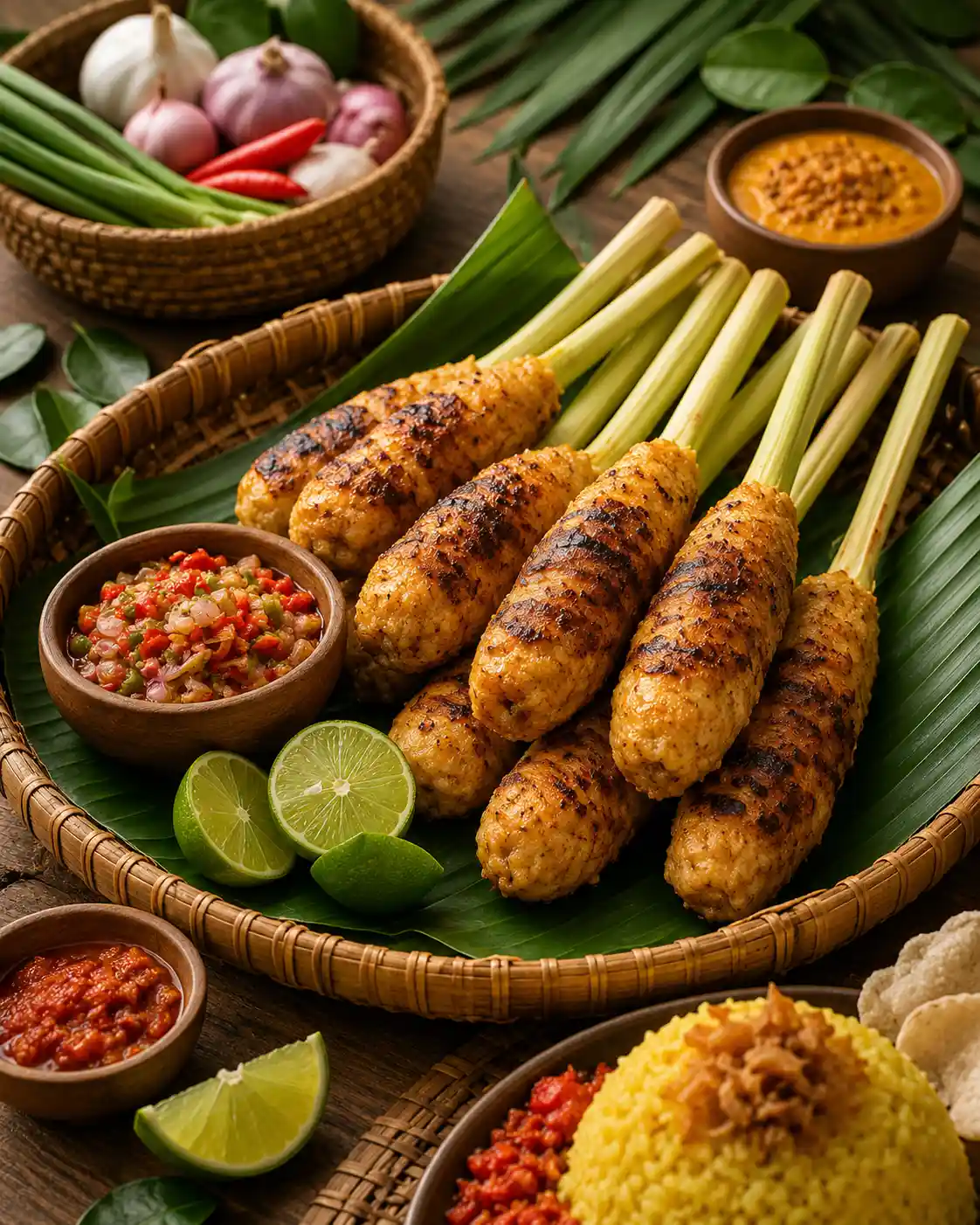
Sate Lilit
Minced fish, chicken or other ingredients are seasoned, shaped around a stick or stalk and grilled. The wrapping technique is what gives “lilit” its name.
Read the Sate Lilit recipe →Traditional Balinese food is much more than a list of famous dishes. It is a way of cooking shaped by the island's ingredients, spice pastes, cooking techniques and cultural traditions. From sate lilit and sambal matah to betutu and lawar, the flavours are often built from combinations of aromatics rather than a single dominant spice.
WHAT MAKES IT DISTINCTIVE?
A defining feature of Balinese cooking is its use of complex spice and aromatic mixtures. Base Genep, often described as a “complete” spice paste, brings together ingredients such as shallot, garlic, turmeric, ginger, galangal, kencur, lemongrass, chilli and other spices. Exact combinations and proportions vary between recipes and kitchens.
This layered approach helps explain why dishes that look simple can have a surprisingly deep flavour. Fresh aromatics are prepared, pounded or blended, then cooked or combined with other ingredients according to the dish.
Learn about Base Genep →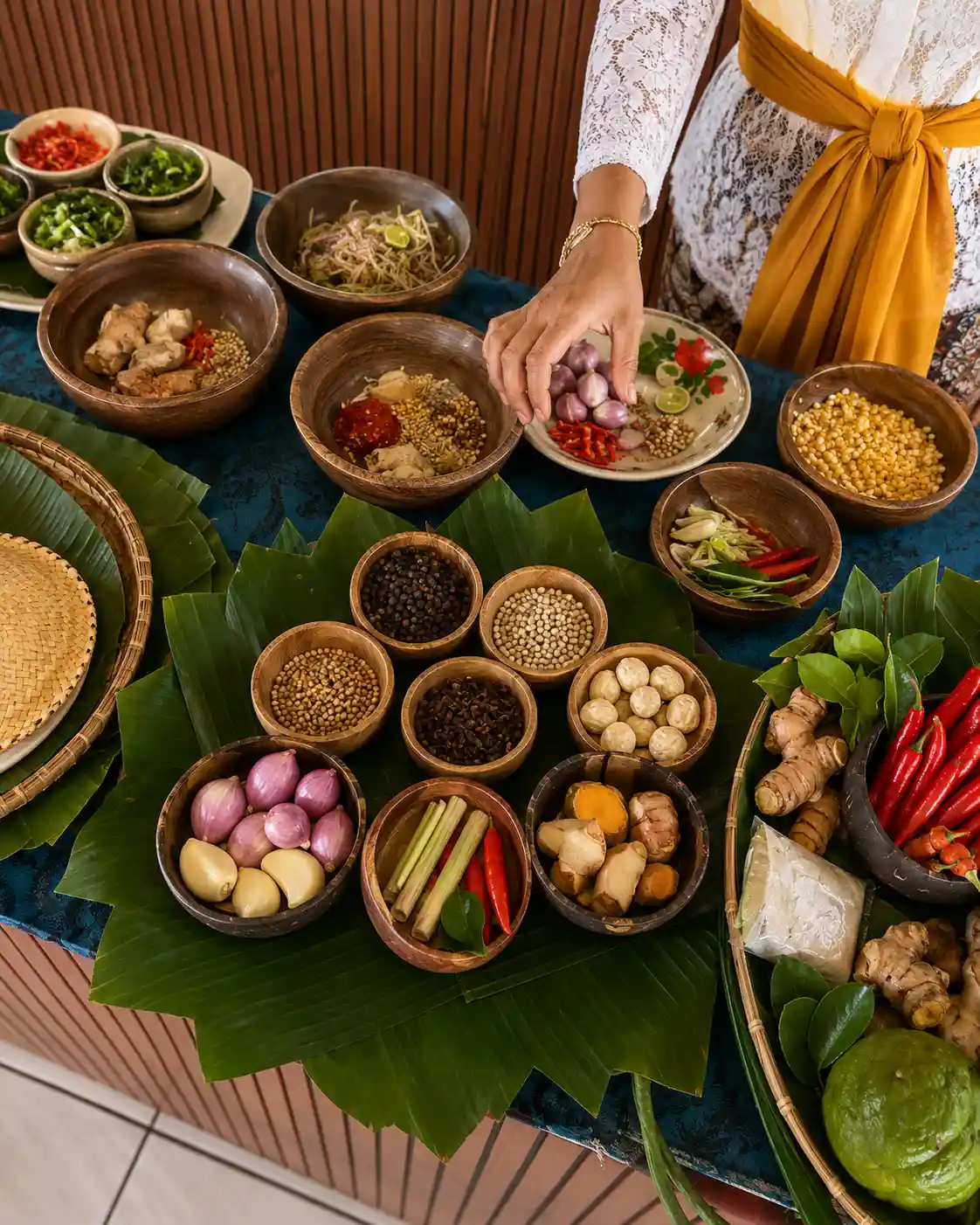
DISHES TO KNOW
These dishes represent different sides of Balinese cooking: grilled food, fresh sambal, slow-cooked spiced dishes and preparations built around vegetables and coconut.
Minced fish, chicken or other ingredients are seasoned, shaped around a stick or stalk and grilled. The wrapping technique is what gives “lilit” its name.
Read the Sate Lilit recipe →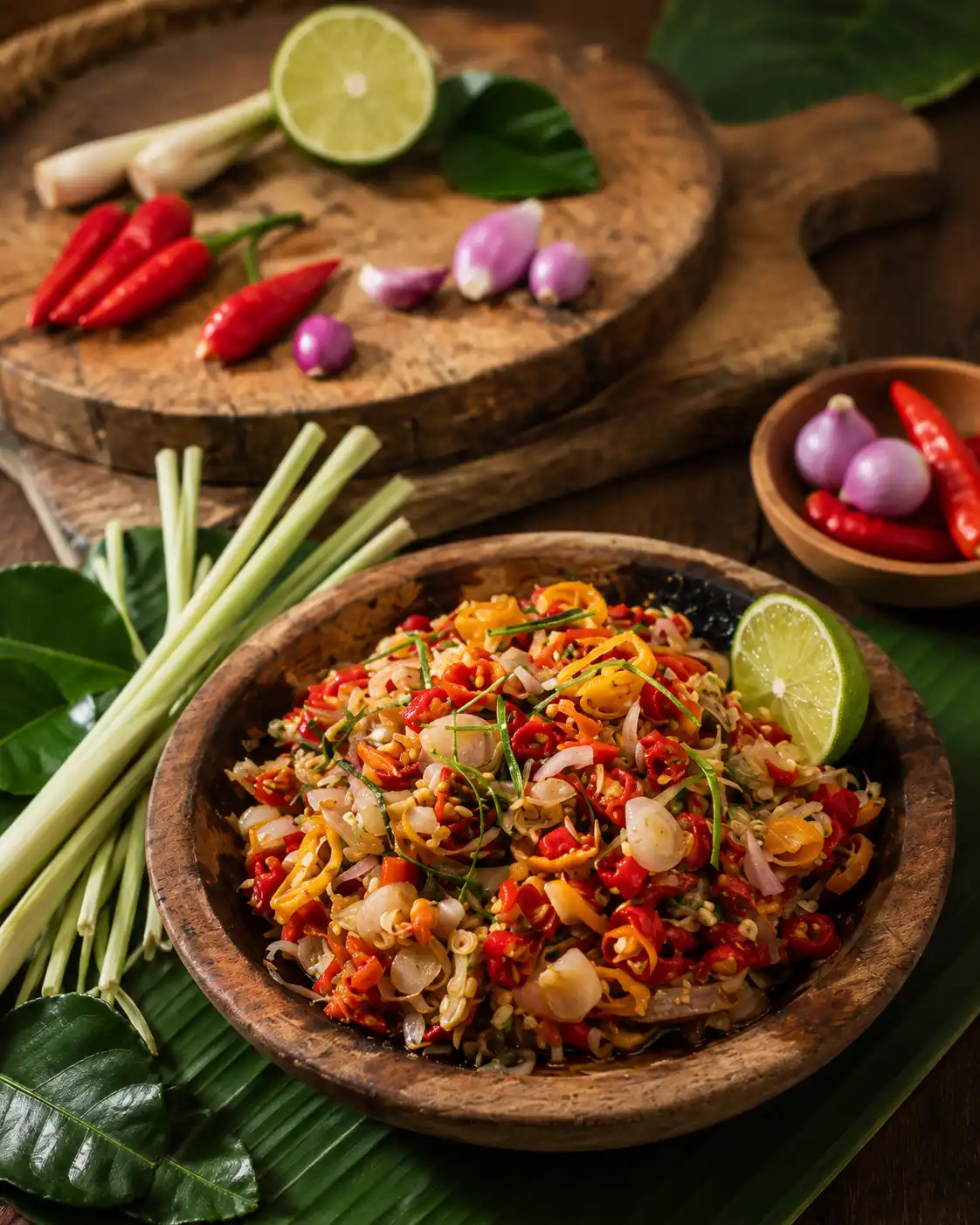
A fresh Balinese sambal made from sliced aromatics, chilli, citrus and oil. It is known for its bright, raw character rather than a cooked paste.
Read the Sambal Matah recipe →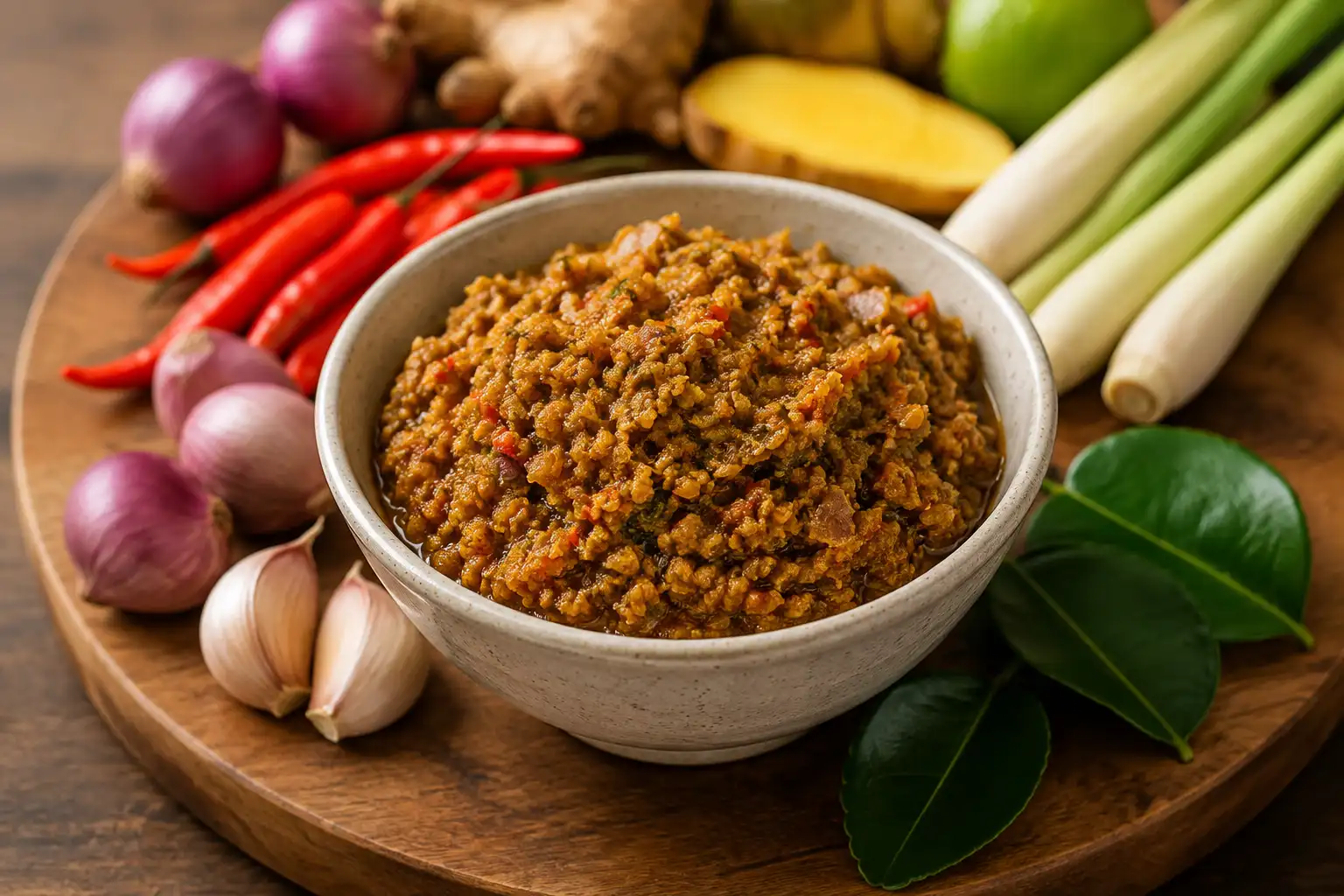
Aromatic Balinese spice paste used as a foundation for many savoury preparations, with variations from kitchen to kitchen.
Make Base Genep →BEYOND THE FAMOUS THREE
Balinese cuisine includes many preparations beyond the dishes most often seen on tourist menus. Names, recipes and availability can vary by region, community and occasion.
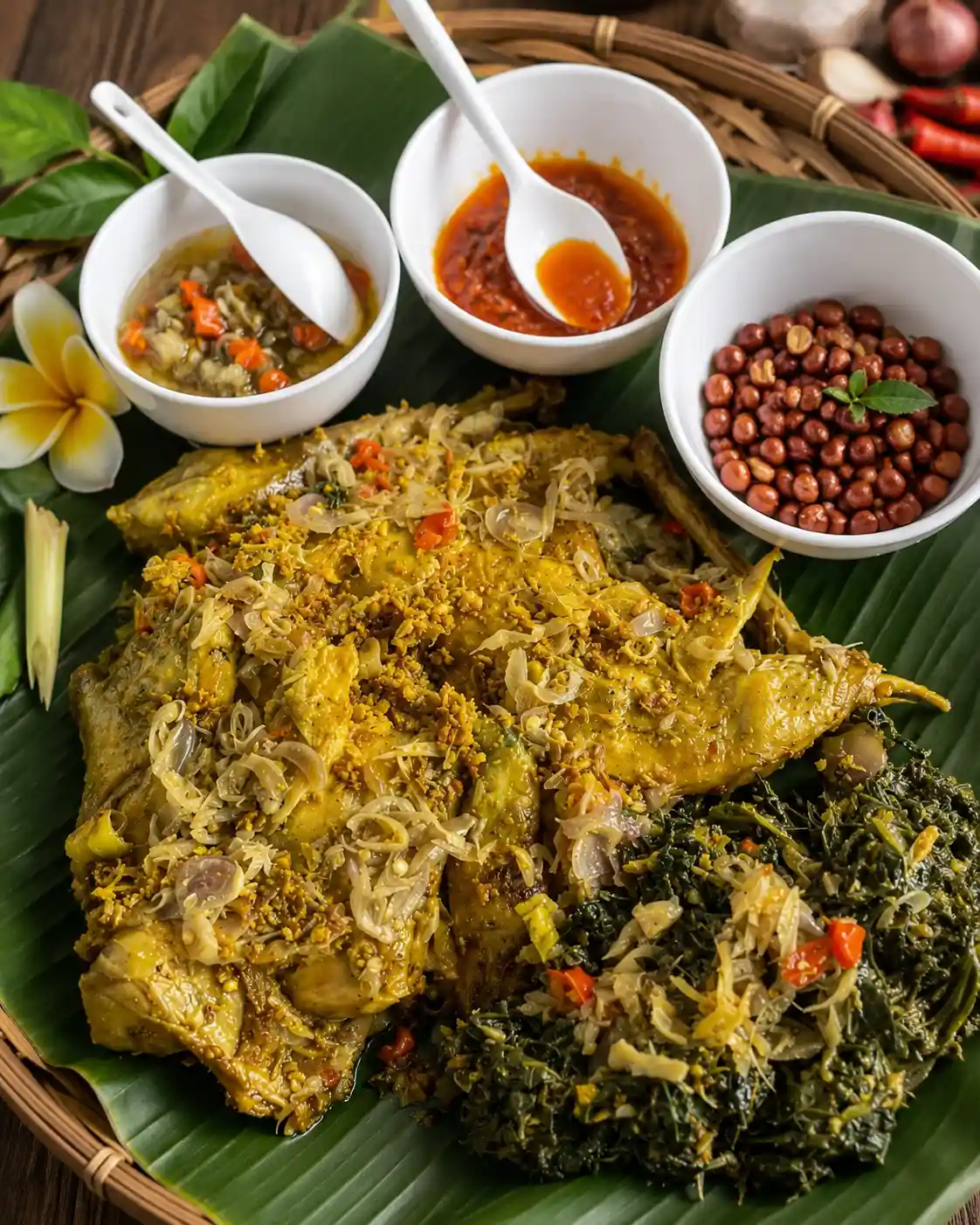
Chicken or duck prepared with a rich spice mixture and cooked slowly until tender. It is strongly associated with Balinese cuisine and special occasions.
A mixed preparation commonly combining vegetables, coconut and seasoned ingredients. Recipes differ considerably depending on the type of lawar.
A Balinese soup or vegetable preparation using the tender inner stem of banana plants, traditionally combined with aromatic seasoning.
Spit-roasted suckling pig associated with Balinese culinary tradition and ceremonial or festive occasions. It is not suitable for every dietary preference.
THE INGREDIENTS
Shallots, garlic, turmeric, ginger, galangal, kencur, lemongrass, chillies, kaffir lime and coconut appear repeatedly across Balinese recipes. Dry spices and other ingredients are added according to the dish.
The result is not simply “spicy food.” Balinese cooking can balance heat with citrus, sweetness, savouriness and the aromatic character of roots and herbs. The exact balance changes from recipe to recipe.
FOOD & CULTURE
Traditional food can be connected with everyday family meals, community work, ceremonies and celebrations. Some dishes are made in large quantities for communal occasions, while others are familiar home or warung foods.
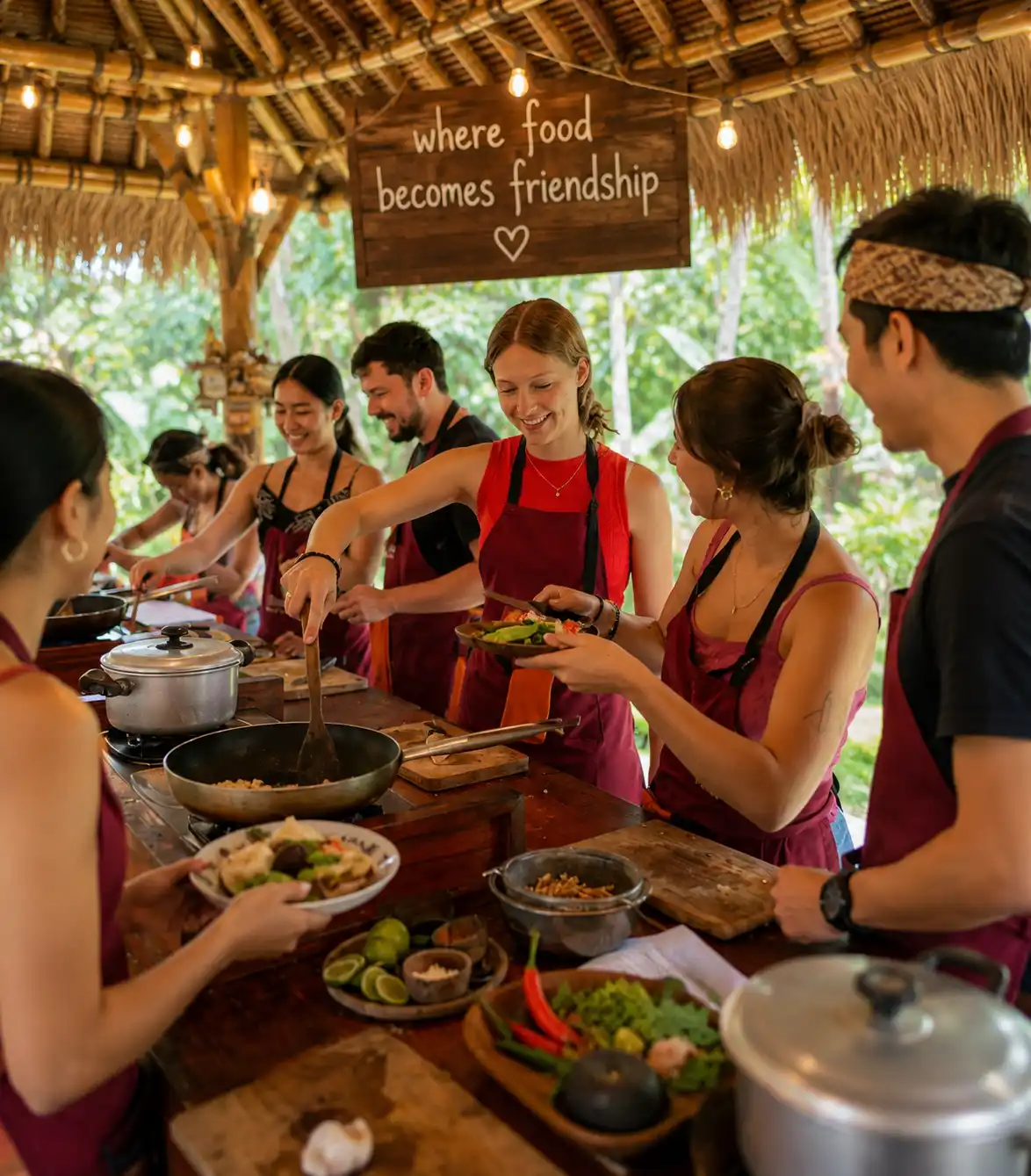
For visitors, learning the food in context can be more meaningful than simply tasting a finished plate. Understanding the ingredients, preparing the bumbu and cooking the dish helps reveal why the cuisine tastes the way it does.
Recipes and guides from the same kitchen.