01 · MEAT & POULTRY
Rich savoury dishes
Base Genep can be cooked with meat or poultry as part of dishes such as betutu-style preparations and other spiced Balinese foods.
Base Genep is a traditional Balinese spice mixture made from fresh aromatics, roots, chillies and dry spices. It is commonly prepared ahead and used as a foundation for different savoury dishes.
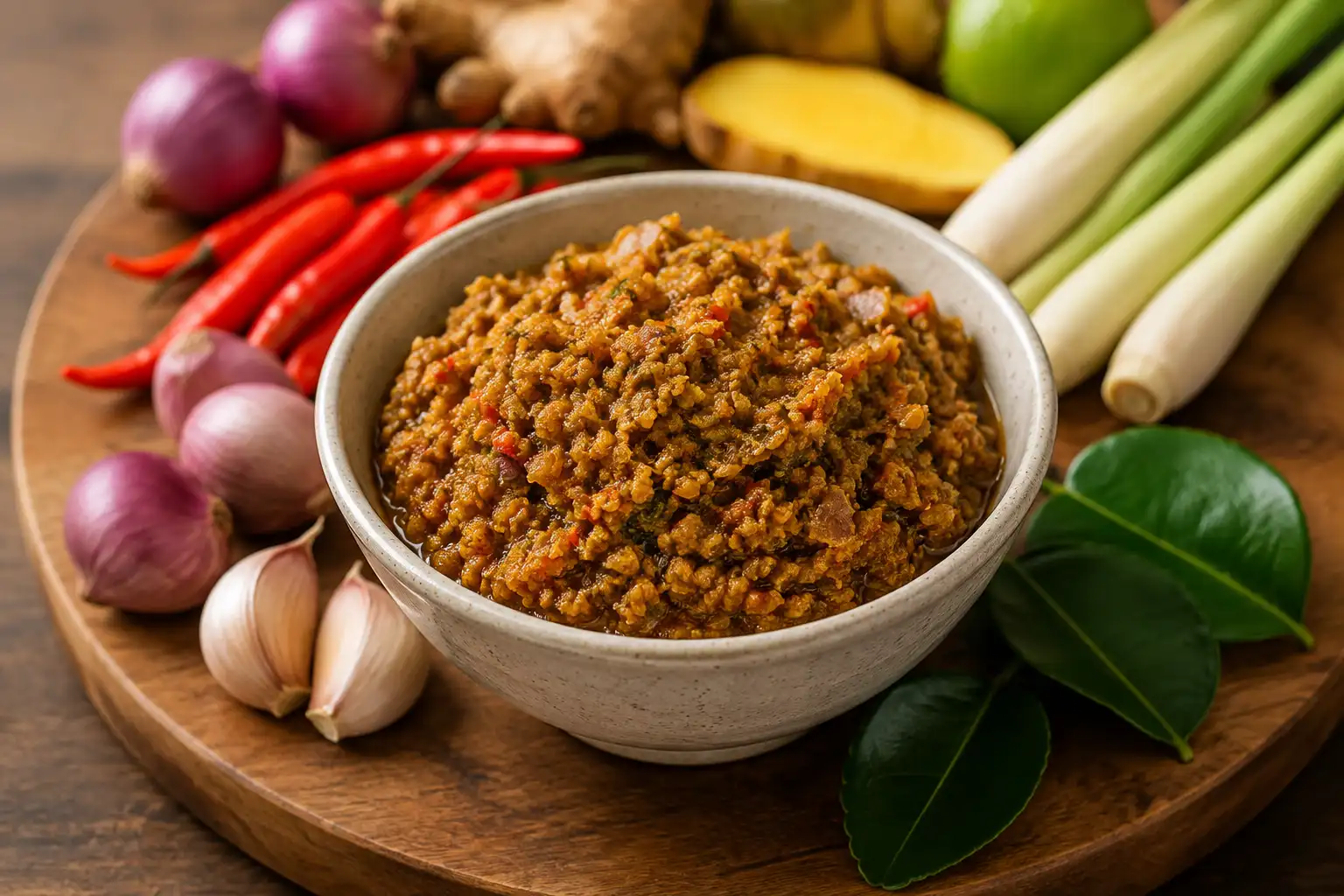
WHAT IS BASE GENEP?
Base Genep is one of the best-known Balinese spice pastes. The name is commonly explained as meaning “complete,” reflecting the broad combination of aromatics and spices in the paste. It can be used with meat, seafood and vegetables, and different Balinese kitchens have their own proportions and variations.
There is no single universal ingredient list. Published Balinese recipes differ in the amount of turmeric, galangal, kencur, chilli and dry spices, and some versions include terasi while others leave it out. The recipe below is therefore a practical version, not a claim that every Balinese household makes it exactly this way.
PRACTICAL RECIPE
This version combines the recurring ingredients found across documented Base Genep recipes: shallots, garlic, turmeric, galangal, ginger, kencur, lemongrass, candlenuts, chilli and dry spices.
HOW TO MAKE IT
Traditionally, Balinese cooks finely chop or pound many of the ingredients. A blender or food processor is a practical shortcut at home, but keeping some texture rather than making a completely smooth puree gives the paste a more rustic character.
Peel and roughly chop the shallots, garlic, chillies, turmeric, galangal, ginger, kencur, lemongrass and candlenuts.
Pound the ingredients with the coriander and peppers into a coarse paste. For a blender, add a little oil and pulse rather than over-processing.
Heat the coconut oil over medium-low heat. Add the paste and cook slowly, stirring regularly so the fresh spices do not scorch.
Add salt and optional palm sugar. If using terasi, cook it with the paste until the raw aroma disappears and the mixture smells deeply fragrant.
Let the paste cool, then transfer it to a clean covered container. Refrigerate and use within several days, or freeze in small portions for longer storage.
One paste, many Balinese preparations.
01 · MEAT & POULTRY
Base Genep can be cooked with meat or poultry as part of dishes such as betutu-style preparations and other spiced Balinese foods.
02 · SEAFOOD
The aromatic paste also works with fish and seafood, adding turmeric, roots, lemongrass and other spices to the dish.
03 · VEGETABLES
Use a smaller amount as a flavour base for vegetables, soups or other preparations where a fragrant spice foundation is useful.
BALINESE COOKING TECHNIQUE
One of the interesting parts of making Base Genep is how the ingredients are prepared. Traditional methods can involve finely chopping or pounding the fresh ingredients, while modern home cooks often use a blender or food processor. The goal is a fragrant paste that still feels like it came from fresh ingredients.
If you want to understand how Balinese cooks combine these spices in a real kitchen, the easiest way is to make them hands-on. Our Ubud cooking class introduces the ingredients and techniques while you cook alongside local hosts and other travellers.
Continue through our recipe and food guides.